





Digital retail has reached a pivotal transformation point where traditional recommendation algorithms no longer suffice to meet rising consumer expectations. For years, e-commerce platforms relied on collaborative filtering and basic rule-based systems to display related items. While these legacy methods provided a baseline for cross-selling, they frequently suffered from cold-start problems, static product associations, and an inability to comprehend nuanced user intent. In 2026, the integration of GenAI is redefining e-commerce personalization. By combining multimodal models, real-time vector search, and LLMs, forward-thinking e-tailers can now deliver hyper-personalized product recommendations at scale, turning passive catalog browsing into dynamic, intent-driven shopping journeys.
Evolving from reactive filtering to generative understanding
The fundamental shift introduced by Generative AI lies in its ability to process multi-structured contextual data rather than relying solely on historical transaction logs. Traditional algorithms struggle when a user searches using abstract or scenario-based queries. Generative models, powered by advanced vector embeddings and semantic search frameworks, interpret the underlying intent behind natural language queries. Furthermore, GenAI continuously synthesizes real-time session telemetry – such as dwell time, device context, active clickpaths, and local weather patterns – to adjust product recommendations dynamically during an active browsing session.
Pillar 1: Hyper-personalized dynamic product presentations
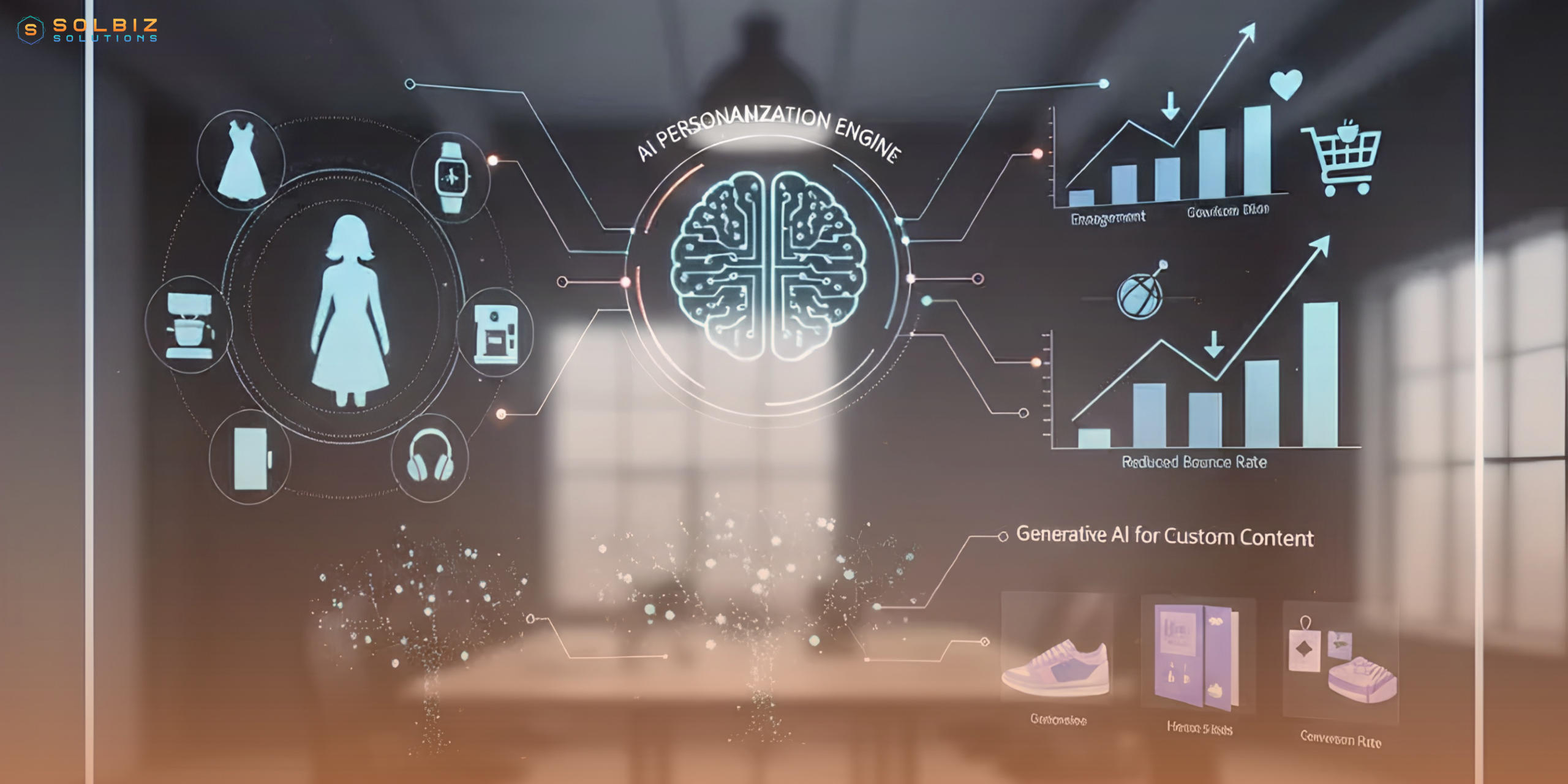
One of the most powerful applications of GenAI in retail is the real-time generation of adaptive media and copy. In a conventional e-commerce setup, every user views identical product photos and static marketing copy. Generative AI enables platforms to tailor product presentations to individual consumer personas. For instance, an outdoors retailer can dynamically reframe a jacket’s value proposition, highlighting waterproof durability for a customer in a rainy climate, while emphasizing lightweight packability for an urban traveler. Generative visual models can even project products into personalized lifestyle backgrounds, dramatically boosting click-through and conversion rates.
Pillar 2: Autonomous conversational shopping assistants
Generative AI elevates virtual customer support from rigid, rule-based chatbots into sophisticated, autonomous shopping assistants. Embedded directly within the e-commerce storefront, these LLM-driven agents act as knowledgeable virtual sales associates. They can evaluate complex customer requirements, verify product compatibility across large product catalogs, and generate customized bundle recommendations on the fly. By addressing specific customer hesitations and providing instant, accurate answers regarding sizing, materials, and shipping policies, conversational GenAI agents reduce cart abandonment and drive average order value.
Pillar 3: Mitigating cold-start issues with synthetic persona modeling
Historically, introducing new SKUs or onboarding new shoppers presented significant recommendation bottlenecks due to a lack of historical data. Generative AI solves this cold-start challenge through synthetic persona modeling and zero-shot semantic matching. When a new product is added to the inventory catalog, vision-language models automatically extract rich attribute metadata, visual features, and conceptual tags. This enables the recommendation engine to match new products with relevant customer segments instantly upon launch, accelerating inventory velocity and eliminating dead stock risks.
Conclusion
Generative AI is shifting digital retail from static catalog browsing to an interactive, personalized discovery experience. By leveraging generative models for intent-driven search, adaptive content presentation, and intelligent conversational support, enterprise e-tailers build deeper customer loyalty while maximizing long-term lifetime value.
